Does the Update Slow Down an Older iPhone? Ours Gained More Than the New One.
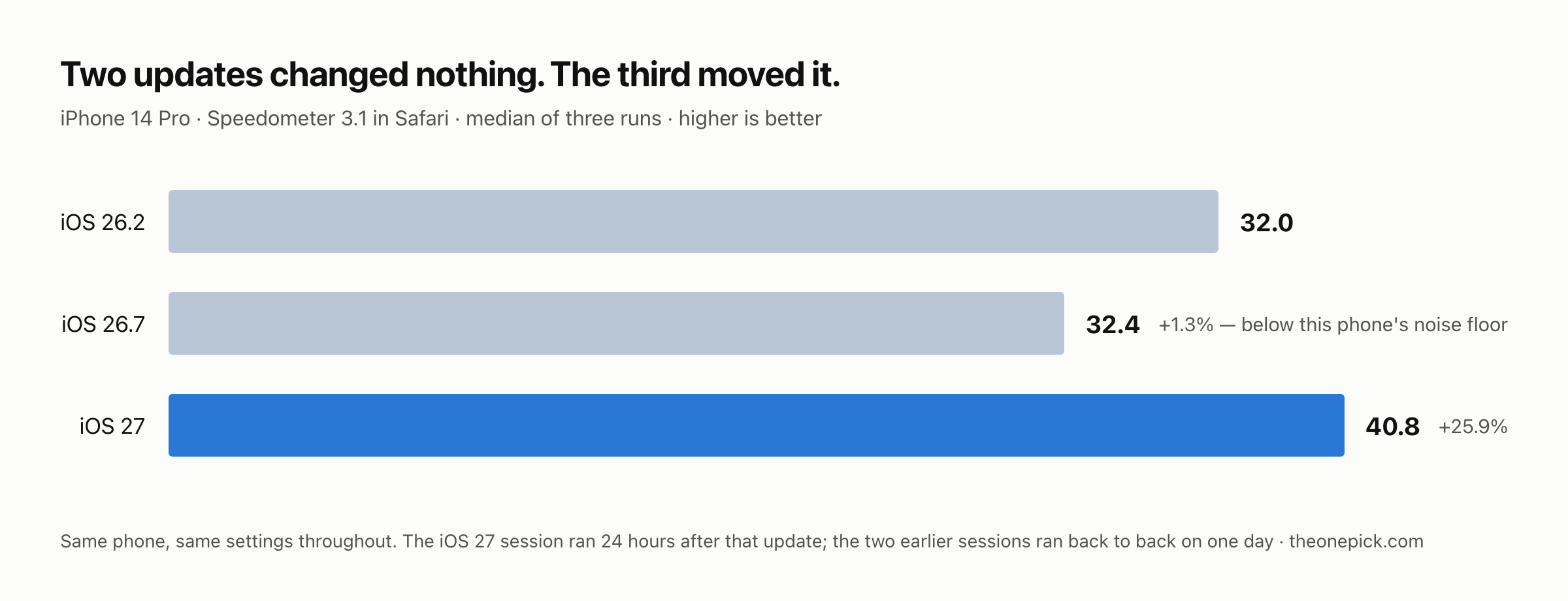
A 2022 iPhone and a 2026 iPhone, both measured 24 hours after updating to iOS 27. Both got faster. The four-year-old phone gained 4.8 points more.
A 2022 iPhone and a 2026 iPhone, both measured 24 hours after updating to iOS 27. Both got faster. The four-year-old phone gained 4.8 points more.
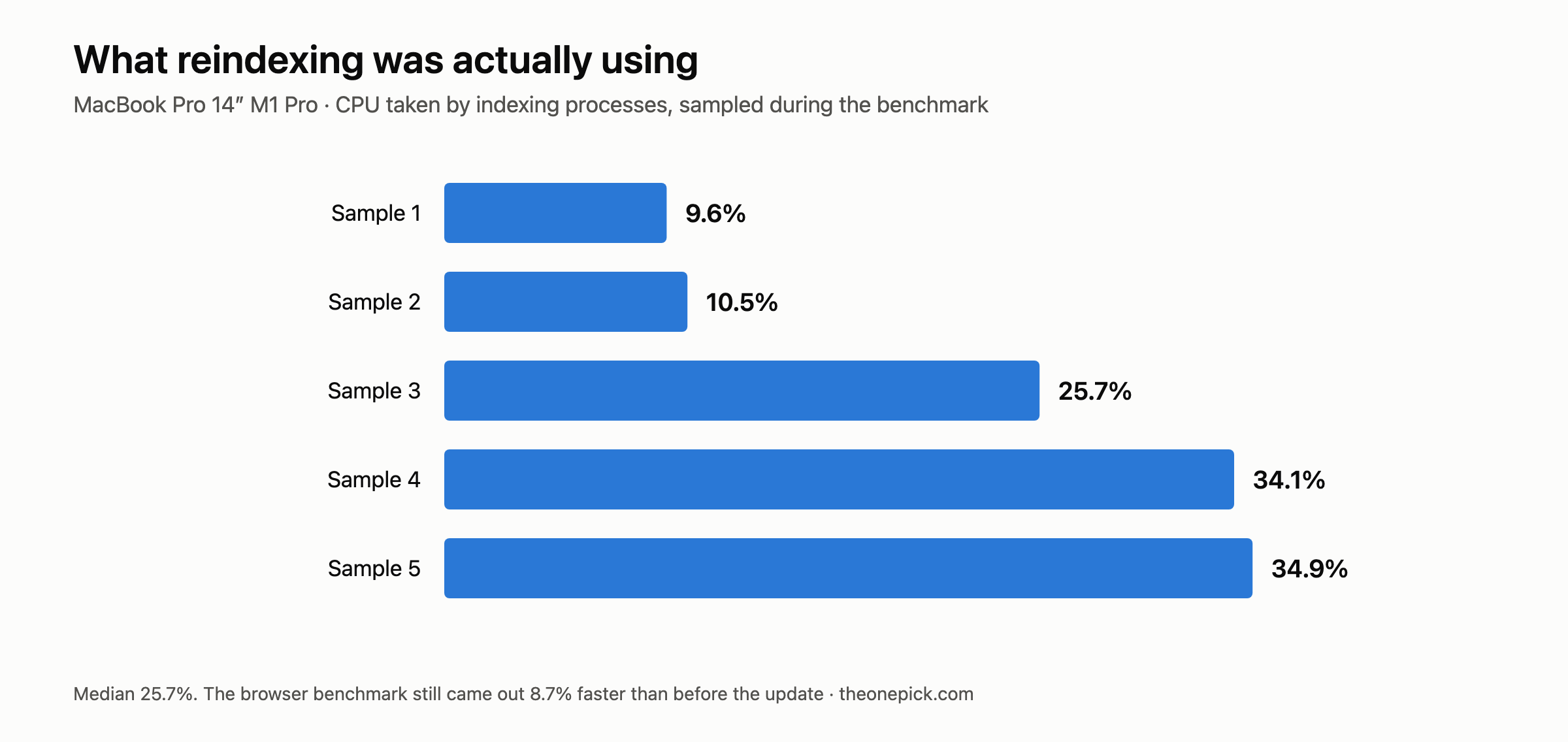
Every guide says wait a few days before judging an update. We measured during the wait, watched reindexing take a quarter of a CPU, then measured again after.
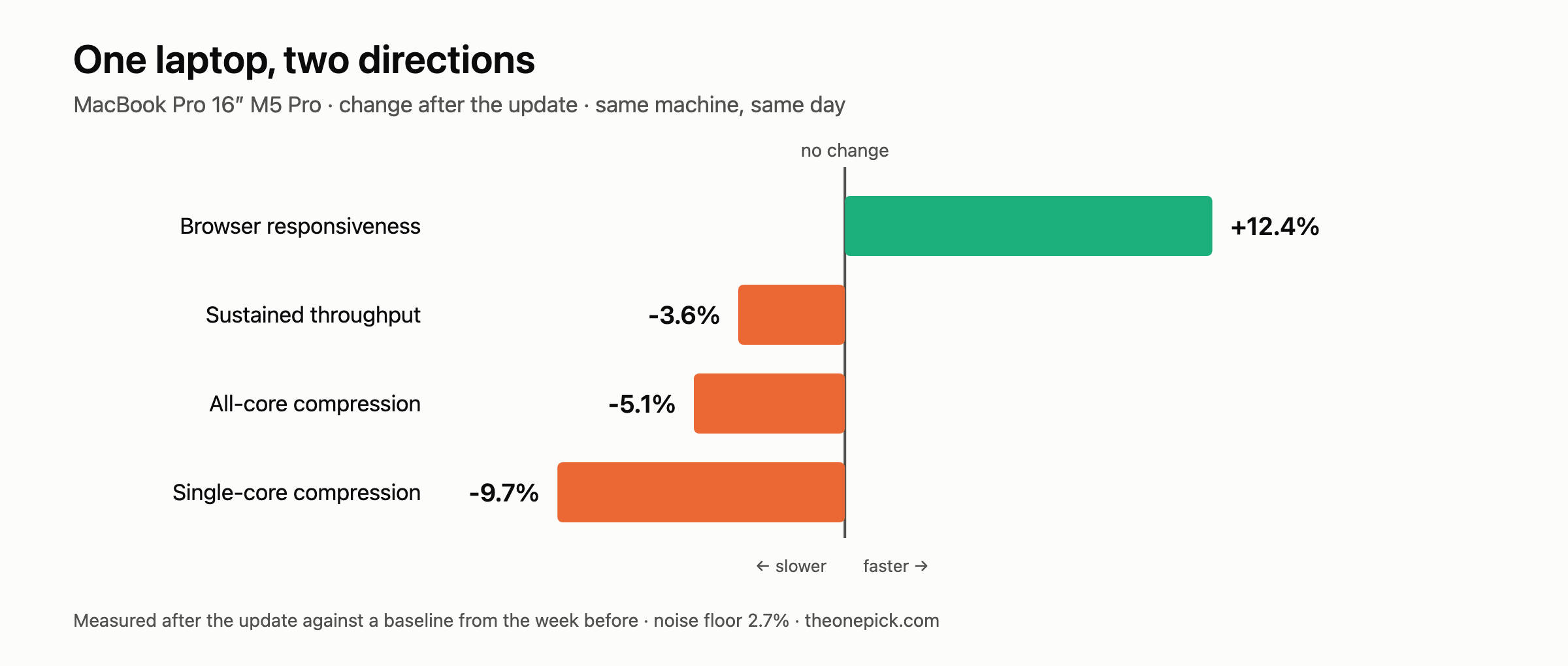
The same MacBook Pro ran the browser 12.4% faster and compressed files 9.7% slower after the update. Same machine, same day, same measuring session.
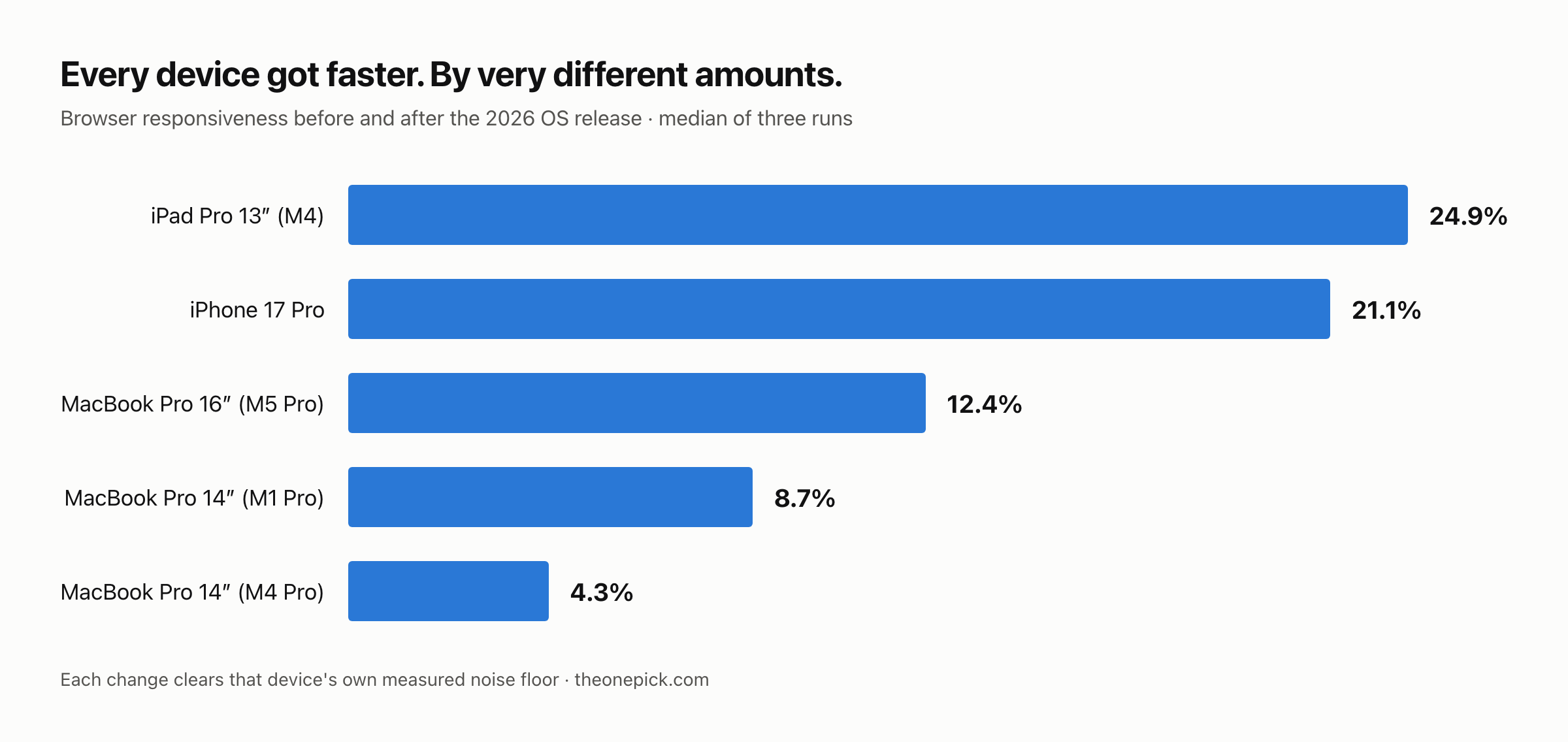
Five devices with measured baselines from the week before. All five got faster after the update — by between 4.3% and 24.9%. The spread is the part worth reading.
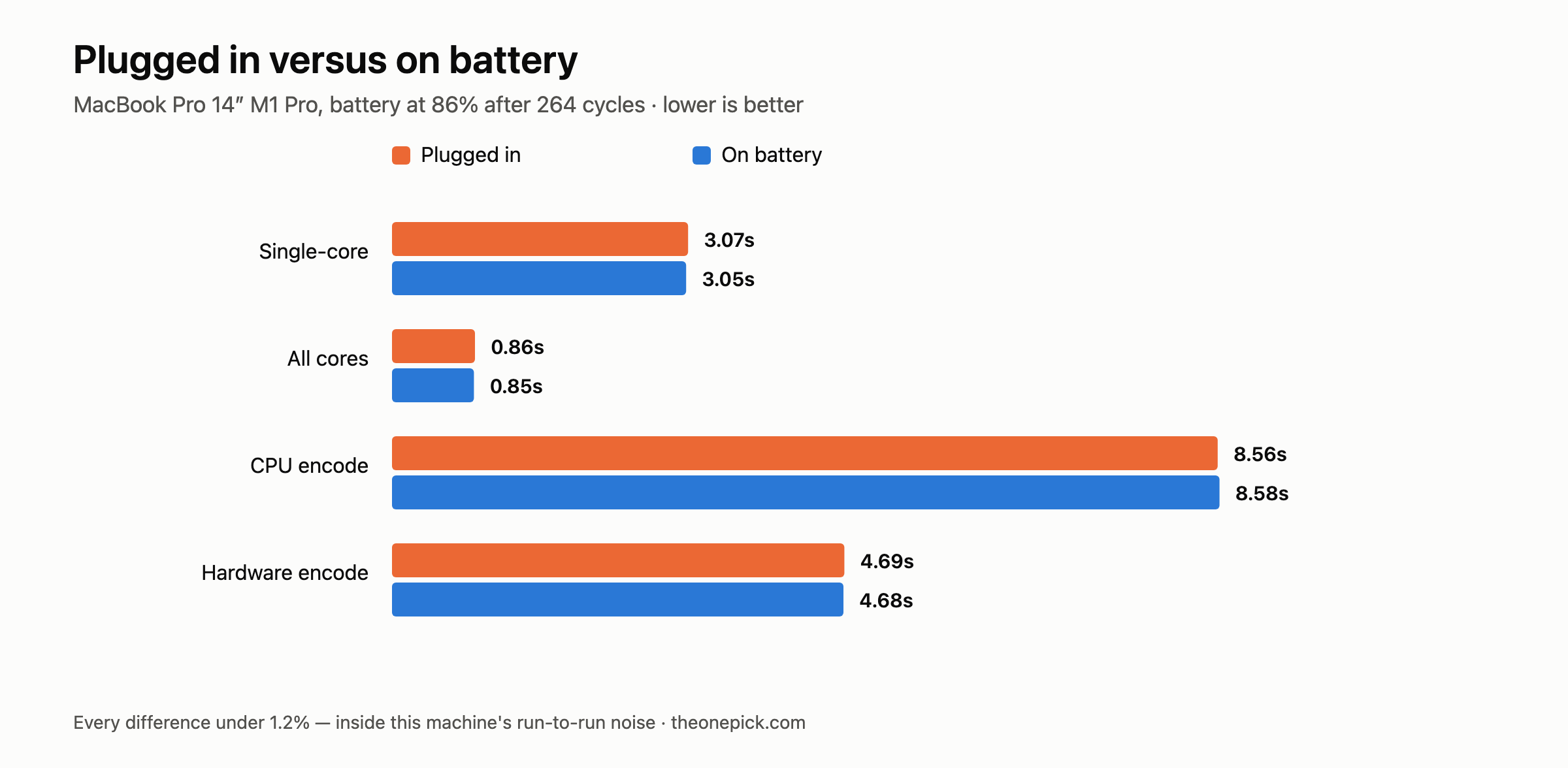
A four-year-old MacBook Pro at 86% battery ran every test at full speed unplugged. The widest gap we found was 1.2% — inside this machine’s run-to-run noise.
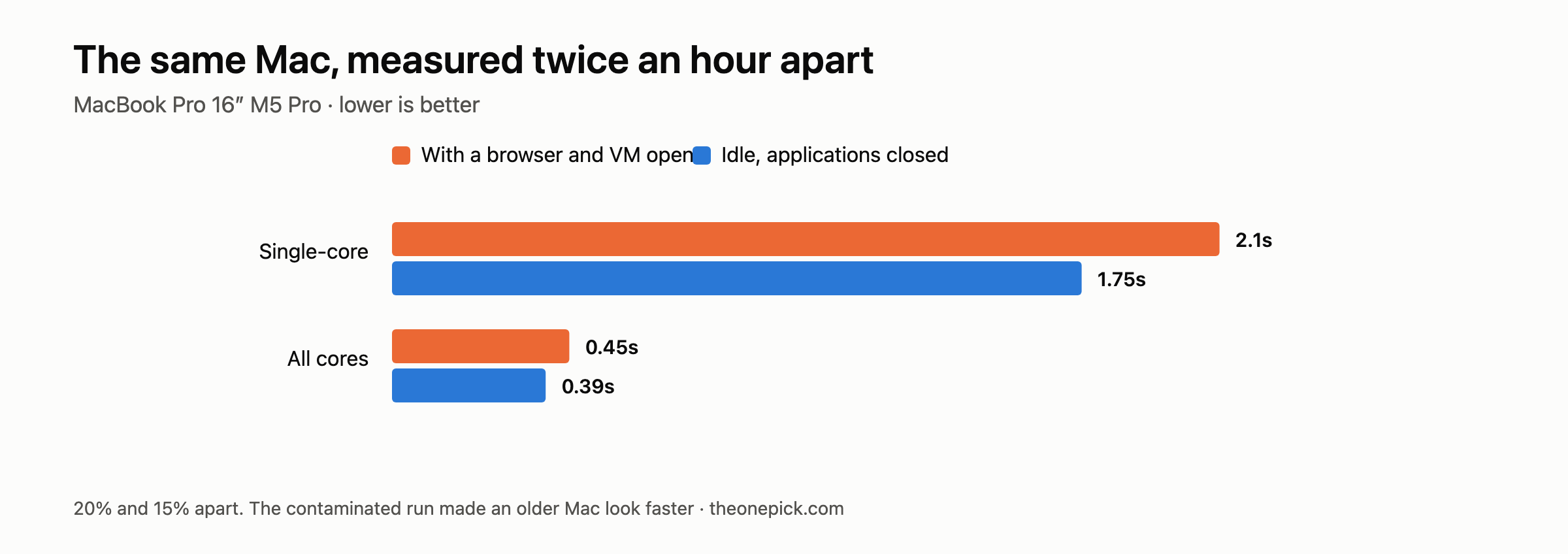
The same Mac, measured twice an hour apart, came out 20% apart. The machine never changed. The contaminated run made an older Mac look faster than a newer one.
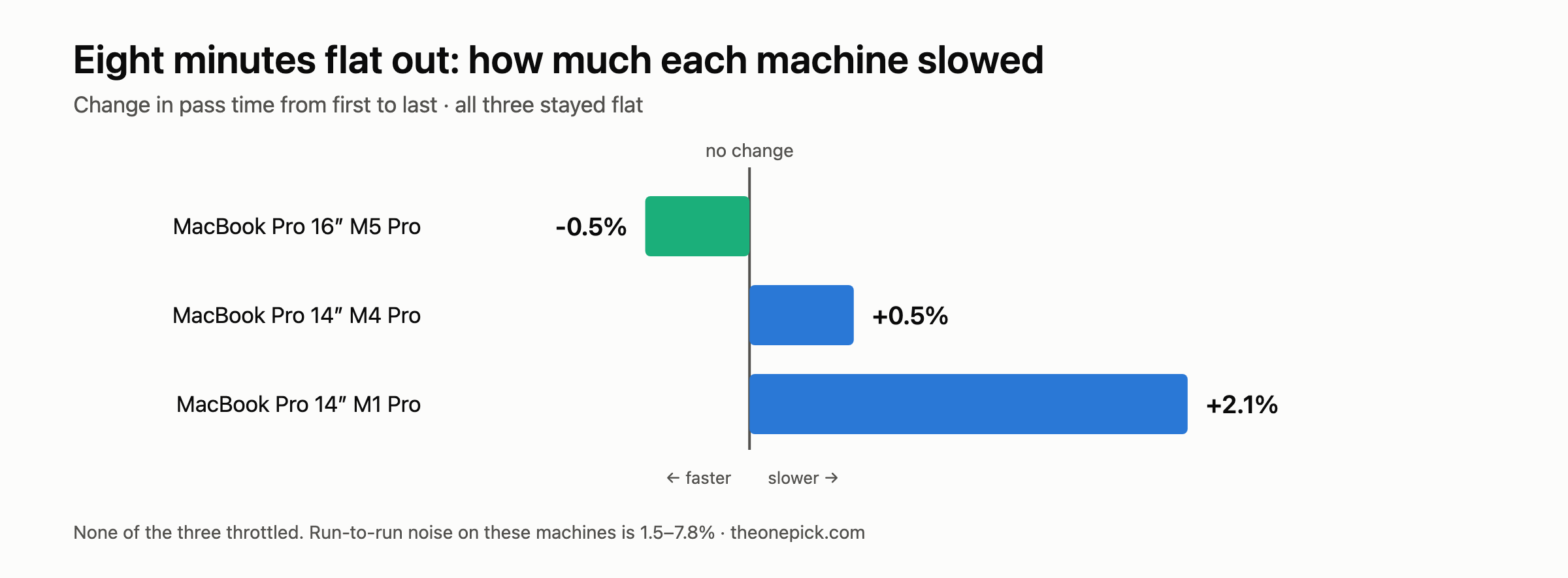
Eight minutes at full load on three MacBook Pros. None of them throttled — the oldest finished 2.1% slower than it started, which is inside its own noise.
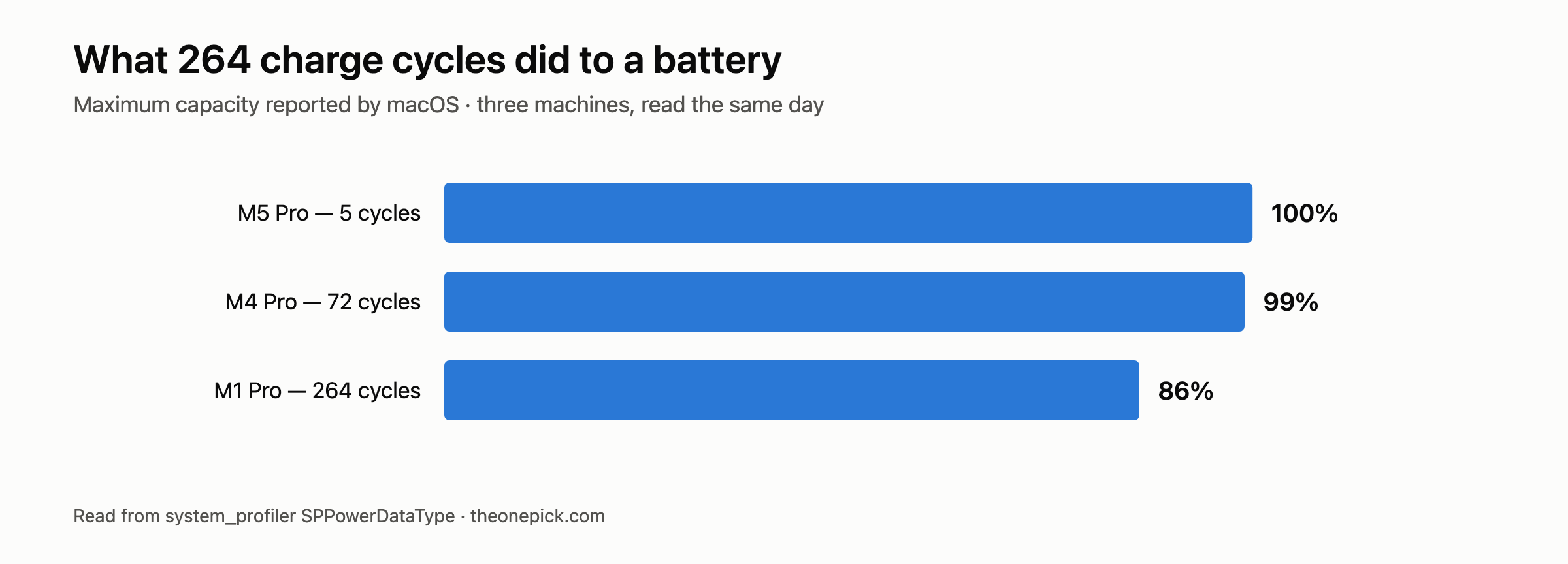
264 charge cycles, four years, 86% capacity. Read off three machines the same day, with the part nobody can tell you: how it was charged.
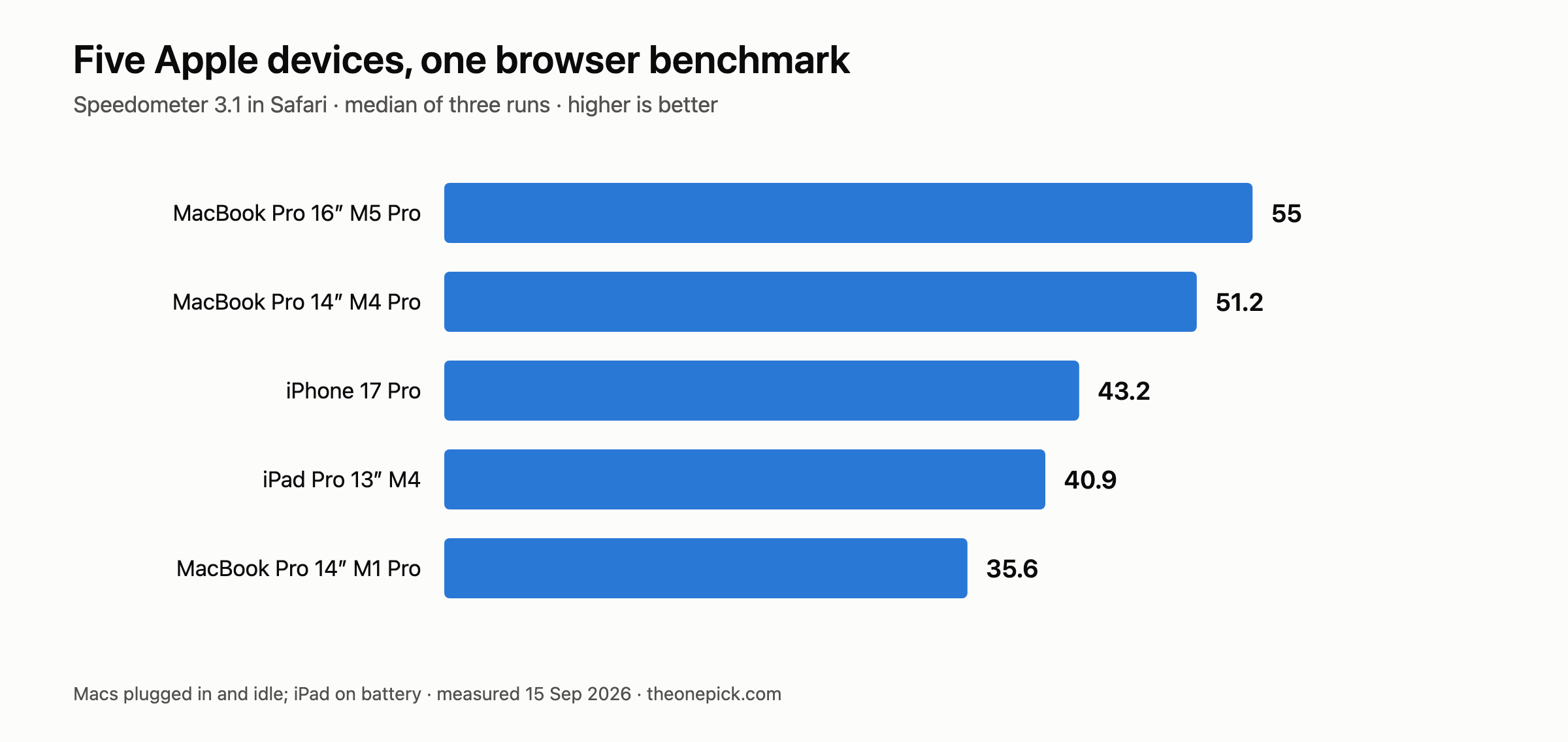
Speedometer 3.1 on five Apple devices we own, three passes each. The iPhone 17 Pro finished ahead of a 13-inch iPad Pro — and a laptop beat a tablet running the same chip.
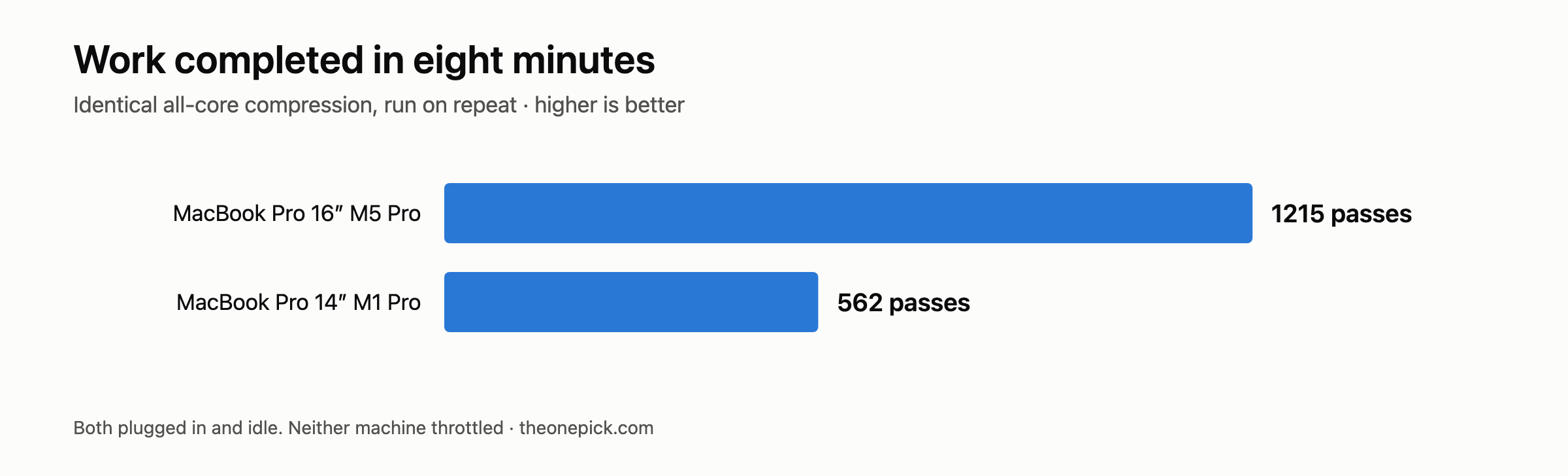
Four years of silicon buys between 1.40× and 2.38×, and which end you land on depends on one question about your work. We measured both ends.